As they are capable of inhibiting changes in the body that can cause blockages in the arteries, the flavonoids quercetin and the PCOs may be able to protect against the development of certain types of heart disease and related circulatory disorders; these flavonoid compounds are also helpful in that they strengthen and maintain the integrity of various blood vessels in the body in a variety of ways - precluding the onset of diseases. The benefits of a high flavonoid diet were confirmed in recent studies conducted in Finland and the Netherlands, in these tests, people who generally obtained large amounts of flavonoids, especially quercetin, in the duet tended to have a reduced risk of developing heart disease or suffering from a stroke. For example, the results from one specific study, where subjects were kept on a diet high in flavonoids, the chances of any of them dying from heart disease was reduced by a fifty per cent in the tested women and by a factor of twenty three percent in the tested men. The results from another study showed that the highest flavonoid intake led to a drop in the risk of stroke for men by a factor of seventy five per cent when compared to the men who had the lowest supplemental levels.
http://www.herbs2000.com/h_menu/flavonoids.htm
Wednesday, 23 March 2011

Health Benefits of Flavonoids
Flavonoids have antioxidant activity. Flavonoids are becoming very popular because they have many health promoting effects. Some of the activities attributed to flavonoids include: anti-allergic, anti-cancer, antioxidant, anti-inflammatory and anti-viral. The flavonoids quercetin is known for its ability to relieve hay fever, eszema, sinusitis and asthma.
Epidemiological studies have illustrated that heart diseases are inversely related to flavonoid intake. Studies have shown that flavonoids prevent the oxidation of low-density lipoprotein thereby reducing the risk for the development of atherosclerosis.
The contribution of flavonoids to the total antioxidant activity of components in food can be very high because daily intake can vary between 50 to 500 mg.
Red wine contains high levels of flavonoids, mainly quercetin and rutin. The high intake of red wine (and flavonoids) by the French might explain why they suffer less from coronary heart disease then other Europeans, although their consumption of cholesterol rich foods is higher (French paradox). Many studies have confirmed that one or two glasses of red wine daily can protect against heart disease.
Tea flavonoids have many health benefits. Tea flavonoids reduce the oxidation of low-density lipoprotein, lowers the blood levels of cholesterol and triglycerides.
Soy flavonoids (isoflavones) can also reduce blood cholesterol and can help to prevent osteoporis. Soy flavonoids are also used to ease menopausal symptoms.
http://www.phytochemicals.info/phytochemicals/flavonoids.php
Epidemiological studies have illustrated that heart diseases are inversely related to flavonoid intake. Studies have shown that flavonoids prevent the oxidation of low-density lipoprotein thereby reducing the risk for the development of atherosclerosis.
The contribution of flavonoids to the total antioxidant activity of components in food can be very high because daily intake can vary between 50 to 500 mg.
Red wine contains high levels of flavonoids, mainly quercetin and rutin. The high intake of red wine (and flavonoids) by the French might explain why they suffer less from coronary heart disease then other Europeans, although their consumption of cholesterol rich foods is higher (French paradox). Many studies have confirmed that one or two glasses of red wine daily can protect against heart disease.
Tea flavonoids have many health benefits. Tea flavonoids reduce the oxidation of low-density lipoprotein, lowers the blood levels of cholesterol and triglycerides.
Soy flavonoids (isoflavones) can also reduce blood cholesterol and can help to prevent osteoporis. Soy flavonoids are also used to ease menopausal symptoms.
Distribution
Flavonoids are found in most plant material. The most important dietary sources are fruits, tea and soybean. Green and black tea contains about 25% percent flavonoids. Other important sources of flavonoids are apple (quercetin), citrus fruits (rutin and hesperidin),http://www.phytochemicals.info/phytochemicals/flavonoids.php
What is Flavonoids?
 |
| Flavonoid |
Together with carotenes, flavanoids are also responsible for the coloring of fruits, vegetables and herbs.
http://www.phytochemicals.info/phytochemicals/flavonoids.php
Phytochemicals ( Noni Benefit )
The history of published medical research on noni phytochemicals numbers only around a total of 110 reports, which began appearing in the 1950s (searched in September 2008). Just since 2000, over 100 publications on noni have been published in medical literature, defining a relatively young research field. Noni benefits research is at a preliminary stage, as it is mainly still in the laboratory as in vitro or basic animal experiments.
Noni fruit contains noni benefits phytochemicals for which there are no established DRI values. Examples:
* lignans - a group of phytoestrogens having biological activities shown by in vitro experiments
* oligo- and polysaccharides - long-chain sugar molecules that serve a prebiotic function as dietary fiber fermentable by colonic bacteria, yielding short chain fatty acids with numerous potential health properties not yet defined by scientific research on noni
* flavonoids - phenolic compounds such as rutin and asperulosidic acid, common in several Rubiaceae plants
* iridoids - secondary metabolites found in many plants
* trisaccharide fatty acid esters, "noniosides" - resulting from combination of an alcohol and an acid in noni fruit
* free fatty acids - most prominent in noni fruit are caprylic acid and hexanoic acid, responsible for unique pungent (cheese-like) aroma of ripe noni fruit
* scopoletin - may have antibiotic activities; research is preliminary
* catechin and epicatechin
* beta-sitosterol - a plant sterol with potential for anti-cholesterol activity not yet proven in human research
* damnacanthal - a potentially toxic anthraquinone, putatively an inhibitor of HIV viral proteins
* alkaloids - naturally occurring amines from plants. Some internet references mention xeronine or proxeronine as important noni constituents. However, as no reports on either of these substances exist in published medical literature, the terms are scientifically unrecognized. Further, chemical analysis of commercially processed juice did not reveal presence of any alkaloids.
* oligo- and polysaccharides - long-chain sugar molecules that serve a prebiotic function as dietary fiber fermentable by colonic bacteria, yielding short chain fatty acids with numerous potential health properties not yet defined by scientific research on noni
* flavonoids - phenolic compounds such as rutin and asperulosidic acid, common in several Rubiaceae plants
* iridoids - secondary metabolites found in many plants
* trisaccharide fatty acid esters, "noniosides" - resulting from combination of an alcohol and an acid in noni fruit
* free fatty acids - most prominent in noni fruit are caprylic acid and hexanoic acid, responsible for unique pungent (cheese-like) aroma of ripe noni fruit
* scopoletin - may have antibiotic activities; research is preliminary
* catechin and epicatechin
* beta-sitosterol - a plant sterol with potential for anti-cholesterol activity not yet proven in human research
* damnacanthal - a potentially toxic anthraquinone, putatively an inhibitor of HIV viral proteins
* alkaloids - naturally occurring amines from plants. Some internet references mention xeronine or proxeronine as important noni constituents. However, as no reports on either of these substances exist in published medical literature, the terms are scientifically unrecognized. Further, chemical analysis of commercially processed juice did not reveal presence of any alkaloids.
Although there is evidence from in vitro studies and laboratory models for bioactivity of each of the above phytochemicals, the research remains at best preliminary and too early to conclude anything about human health benefits provided by noni or its juice. Furthermore, these phytochemicals are not unique to noni, as nearly all exist in various plant foods.
Laboratory experiments demonstrated that dietary noni juice increased physical endurance in mice. A pilot study in distance runners showed increased endurance capacity following daily intake of noni juice over three weeks, an effect the authors attributed to increased antioxidant status. more
Morinda Citrifolia Herb Extracts
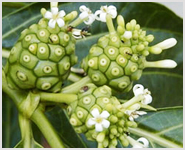
Morinda Citrifolia (NONI) Juice can increase mental clarity and attention span, as well as allow greater physical performance levels. It also benefits the following systems of the body:
• Immune system: supports the immune system's natural ability to fight disease and infection.
• Circulatory system, tissues, and cells: Morinda Citrifolia (NONI) Juice is a superior antioxidant that helps
rid the body of harmful free radicals. It also increases energy levels.
• Digestive system: Morinda Citrifolia (NONI) Juice supports proper digestion and helps you absorb more
nutrients at the cellular level.
• Skin and Hair: Morinda Citrifolia (NONI) Juice contains components that are specifically important to the
skin and hair. It also helps carry beneficial substances to the skin.
• Most commonly used to improve mental alertness, and enhance learning and academic performance. more
| BOTANICAL NAME | MORINDA CITRIFOLIA |
| PLANT PART USED | Fruit |
| EXTRATION METHOD | Water Extration |
| EXTRACTION SOLVENT USED | Water |
| HERB TO EXTRACT RATIO | 5:1 |
| SOLVENT RATIO | 16 x |
| CARRIER USED | Maltodextrine |
| ANALYSING METHOD | Gravimetric |
| DESCRIPTION | Brown powder with characteristics odour |
| ORGANOLEPTIC TEST | Sour in Taste |
| IDENTIFICATION | Presence of Alkaloids |
| WATER SOLUBLE Extractives by IP 66 Method Taking 1 Gm Sample | NLT 70% |
| ACIDITY AS CITRIC ACID | NLT 5% |
| MORINDIN | NLT 15% |
| HEAVY METALS A) AS B) Pb | :Absent : Absent |
| MICROBIAL PROFILE A) Total Plate Count B) Yeast & Molds C) E.Coli D) Salmonella | : 140 CFU/GM : Absent : Absent : Absent |
| USES | Immuno - modulator |
| PACKING | 25 KG HDPE DRUMS |
FLAVONOID CONTENT OF MORINDA CITRIFOLIA
Antioxidant Activity and Content Of Morinda Citrifolia Fruit Extracts 71
1. Introduction
Plants such as herbs have been used in folk medicine for centuries in most of the cultures throughout the world. Morinda citrifolia L. native to Polynesia is one of the traditional folk medicinal plants that have been used for over 2000 years by polynesians for treating diabetes, high blood pressure, cancer, eye problems and many other illnesses [1].
Generation of free radicals or reactive oxygen species (ROS) during metabolism and other activities beyond the antioxidant capacity of a biological system gives rise to oxidative stress [2]. Oxidative stress plays a role in heart diseases, neurodegenerative diseases, cancer and in the aging process [3]. This concept is supported by increasing evidence that oxidative damage plays a role in the development of chronic, age-related degenerative diseases, and that dietary antioxidants oppose this and lower risk of disease [4]. Antioxidants are the substance that when present in low concentrations compared to those of an oxidisable substrate significantly delays or prevents oxidation of that substance [5].
Apart from their role of health benefactors, antioxidants are added in foods to prevent or delay oxidation of food, initiated by free radicals formed during their exposure to environmental factors such as air, light and temperature [6]. At present most of the antioxidants are manufactured synthetically. They belong to the class of synthetic antioxidants. The main disadvantage with the synthetic antioxidants is the side effects when taken in vivo [7]. Strict governmental rules regarding the safety of the food has necessitated the search for alternatives as food preservatives [8]. more
1. Introduction
Plants such as herbs have been used in folk medicine for centuries in most of the cultures throughout the world. Morinda citrifolia L. native to Polynesia is one of the traditional folk medicinal plants that have been used for over 2000 years by polynesians for treating diabetes, high blood pressure, cancer, eye problems and many other illnesses [1].
Generation of free radicals or reactive oxygen species (ROS) during metabolism and other activities beyond the antioxidant capacity of a biological system gives rise to oxidative stress [2]. Oxidative stress plays a role in heart diseases, neurodegenerative diseases, cancer and in the aging process [3]. This concept is supported by increasing evidence that oxidative damage plays a role in the development of chronic, age-related degenerative diseases, and that dietary antioxidants oppose this and lower risk of disease [4]. Antioxidants are the substance that when present in low concentrations compared to those of an oxidisable substrate significantly delays or prevents oxidation of that substance [5].
Apart from their role of health benefactors, antioxidants are added in foods to prevent or delay oxidation of food, initiated by free radicals formed during their exposure to environmental factors such as air, light and temperature [6]. At present most of the antioxidants are manufactured synthetically. They belong to the class of synthetic antioxidants. The main disadvantage with the synthetic antioxidants is the side effects when taken in vivo [7]. Strict governmental rules regarding the safety of the food has necessitated the search for alternatives as food preservatives [8]. more
Extract Dari Daun Mengkudu
DETAILED DESCRIPTION OF THE PREFERRED EMBODIMENTS
The present invention comprises various methods of producing leaf extracts from the leaves of the Indian Mulberry or Morinda citrifolia L. plant. In addition, the present invention comprises various methods for creating a leaf serum by combining the leaf extracts with fruit juice of the Morinda citrifolia plant. Methods of the present invention also include incorporating the leaf serum into a pharmaceutical leaf product (“pharmaceutical” herein referring to any drug or product designed to improve the health of living organisms such as a human beings or mammals, including nutraceutical products). Still further, the present invention comprises various leaf extract compositions, including leaf extracts, leaf serum, and pharmaceutical products having leaf serum incorporated therein. Further details of the present invention are described below.In some embodiments of the present invention, the Morinda citrifolia leaf extracts are obtained using a highly technical and precise process. First, relatively dry leaves from the Morinda citrifolia L. plant are collected, cut into small pieces, and placed into a crushing device, preferably a hydraulic press, where the leaf pieces are crushed. The crushed leaf pieces are then percolated with an alcohol such as ethanol, methanol, ethyl acetate, or other alcohol-based derivatives using methods known in the art. Next, the alcohol and all alcohol-soluble ingredients are extracted from the crushed leaf pieces, leaving a leaf extract that is then reduced with heat to remove all the liquid therefrom. The resulting dry leaf extract will herein be referred to as the “primary leaf extract.”
In some embodiments of the present invention, the primary leaf extract is pasteurized to at least partially sterilize the extract and destroy objectionable organisms. The primary leaf extract is pasteurized preferably at a temperature ranging from 70 to 80 degrees Celsius and for a period of time sufficient to destroy any objectionable organisms without major chemical alteration of the extract. Pasteurization may also be accomplished according to various radiation techniques or methods. see more
Subscribe to:
Posts (Atom)